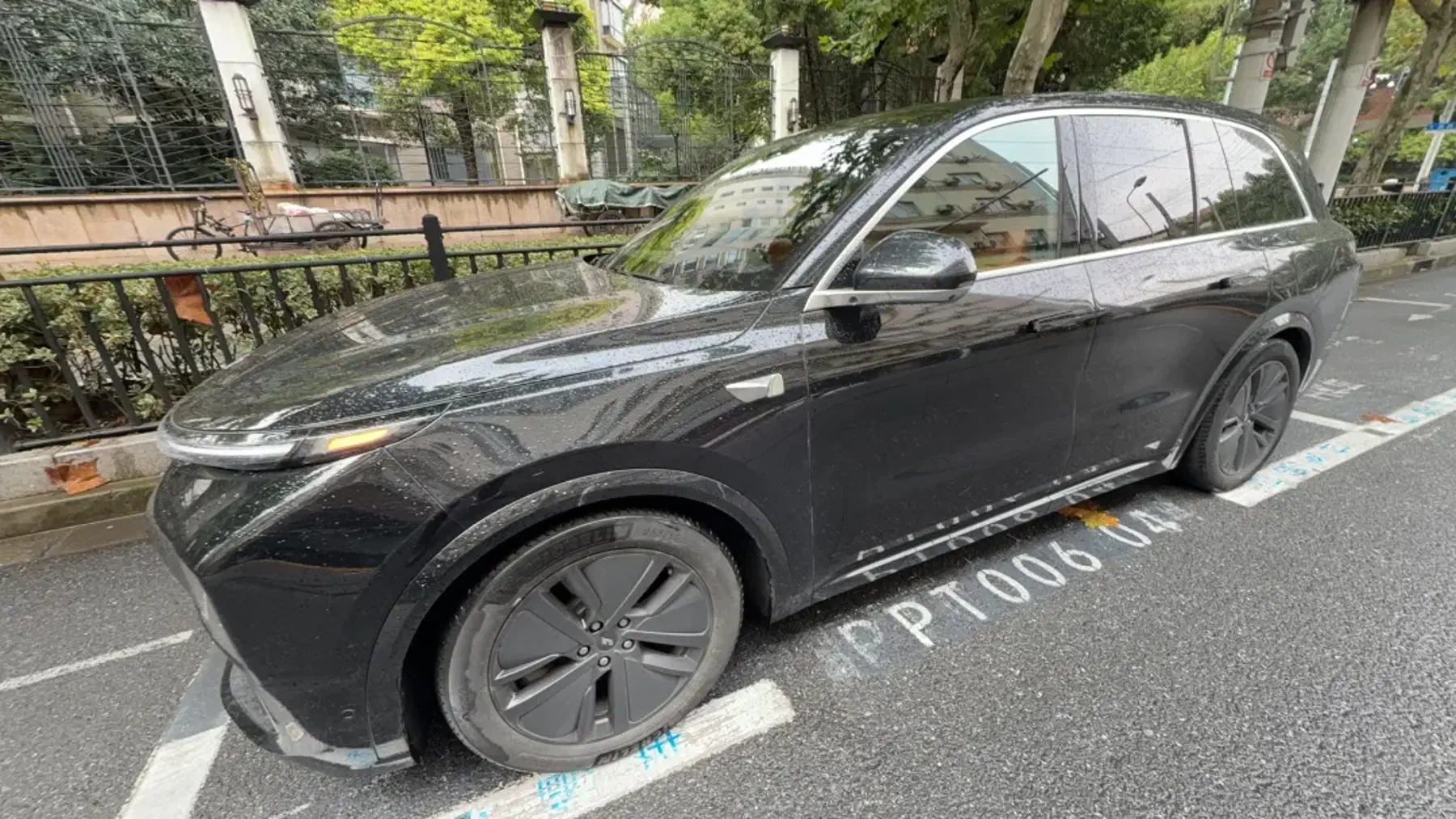
My First EV Road Trip

I’m an old hand with databases and have been driving for 12 years. Yet until this trip, I’d never driven an EV.
It wasn’t some diehard devotion to internal combustion. I simply had no need for a car to commute. When I worked in an office, I usually lived within 300 meters of it, so I had no use for a car. Now I run a one-person business from home and can go a week without leaving the house. A car would just collect dust in the garage.
The only time I drive is on long road trips. On one trip through Xinjiang and other parts of western China, I stayed on the road for over three months. I’ve also taken one- or two-week road trips in the western U.S. and Canada. When you’re covering thousands or even tens of thousands of kilometers, you want something dependable and hassle-free. I always chose a gasoline car without a second thought, to avoid complications along the way.
That changed recently. A friend bought an EV, and I tried its driver-assistance system. I was seriously impressed. When my wife and I went to Huangshan a few days ago, I figured: why not rent an EV this time and see for myself?
Choosing by Elimination: The Li Auto L8?
A quick look at the CAR Inc. rental app showed that the EVs available nearby came down to BYD, Tesla, Li Auto, and AITO, whose Chinese name is Wenjie. My elimination process was blunt:
- BYD: Sitting in one always makes me feel like I’m driving a ride-hailing car. That takes some of the fun out of a road trip. Pass.
- The “Jie” brands: Anything with jie (界) in its Chinese name was off the list without a second look. I don’t need that kind of baggage.
- Tesla: Good cars, but it seemed I still couldn’t use all of FSD’s features in China. I mainly wanted to try driver assistance, so I set Tesla aside this time.
That left the Li Auto L8.
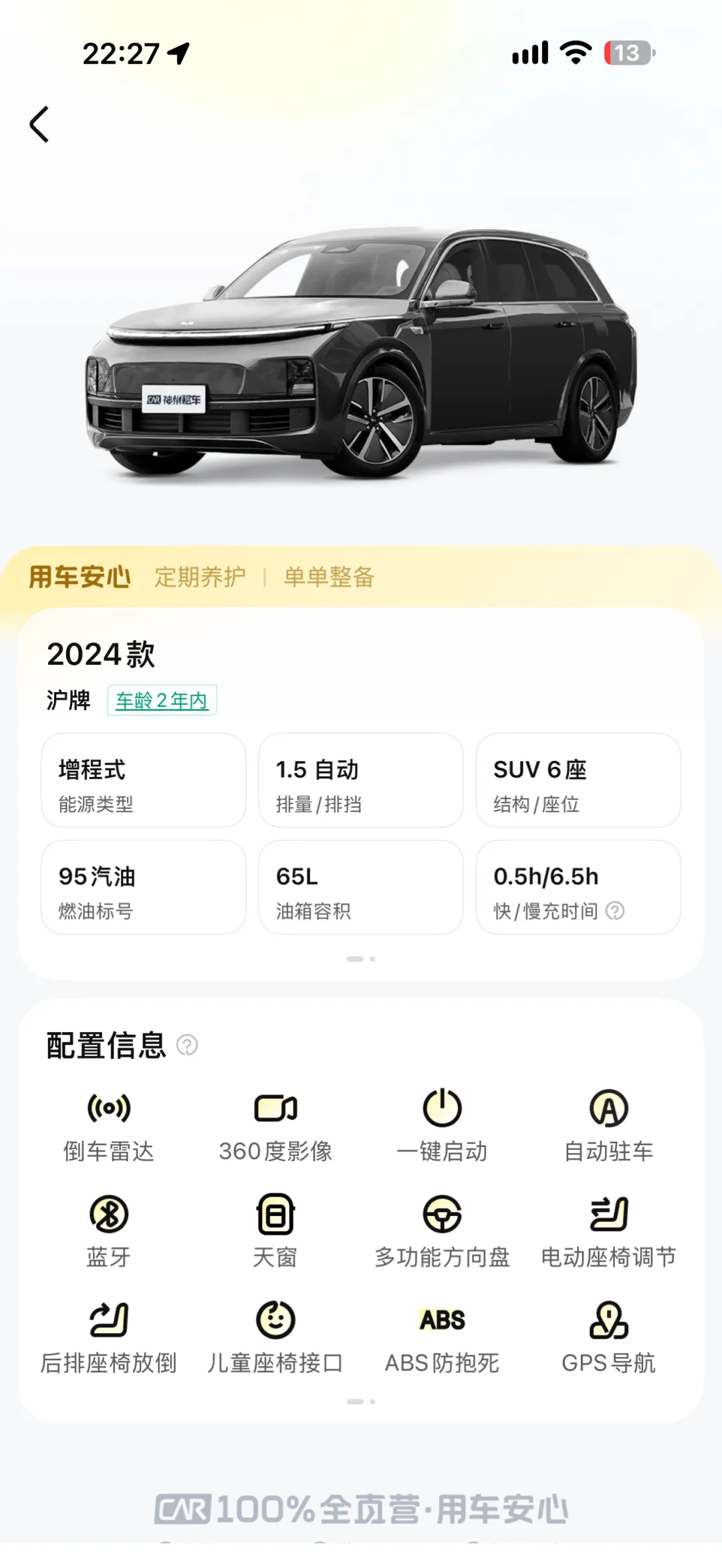
It wasn’t cheap. The rental company offered a BMW 3 Series for just 100 yuan a day. The L8’s base rate alone was 450 yuan, and service fees and insurance brought the daily total to nearly 600 yuan.
Strictly speaking, the L8 isn’t a battery-only EV. It’s a range-extended EV: the wheels are driven electrically, but it carries both a battery and a fuel tank. When the battery runs out, it can generate electricity from gasoline to keep moving. Its advertised combined range is over 1,100 km. For someone used to gasoline cars, trying an EV for the first time with a bit of range anxiety, that felt like a reassuring way to ease into it.
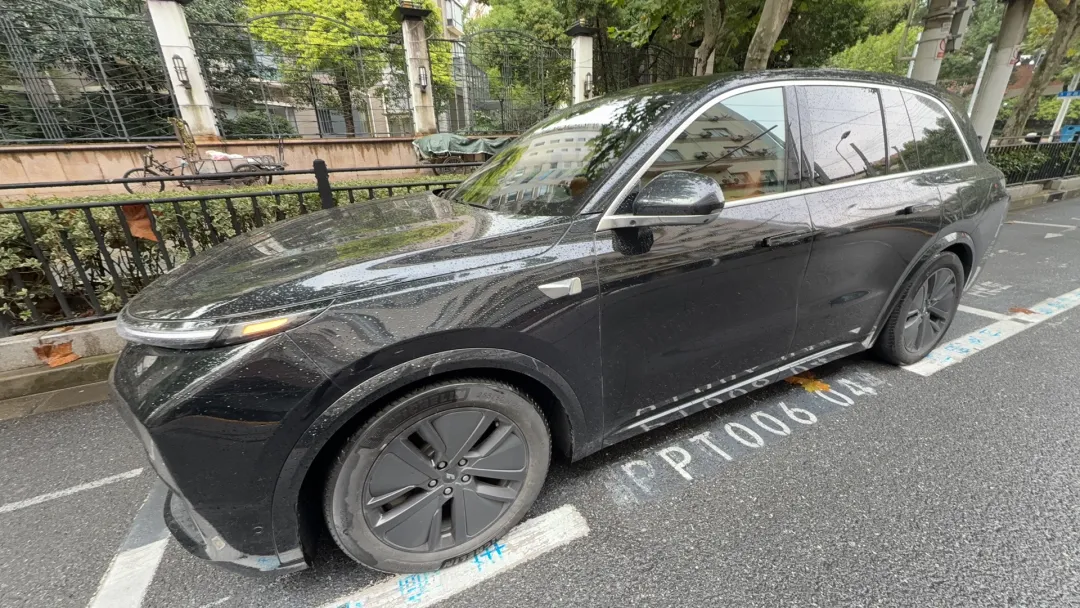
After three days behind the wheel, my verdict was simple: pretty good, actually.
Attention Is the Expensive Part: Driver Assistance Won Me Over
We drove from Shanghai to Hangzhou, then on to Huangshan: over 400 km one way, through city congestion, elevated roads, and long highway stretches. I used driver assistance for almost the entire drive, across all those conditions.
People like to point out that EVs save a few tenths of a yuan per kilometer over gasoline cars. Honestly, I don’t care what powers the car or about saving a few yuan on fuel. What made it worth the money was how much attention driver assistance freed up.
For humans and AI agents alike, attention is the most valuable resource, now and in the future. On long drives in a gasoline car, I used to concentrate on staying in my lane, working the accelerator and brakes, and constantly processing a flood of tiny driving decisions. A few hundred kilometers would leave me exhausted. With driver assistance on, I could focus on the overall traffic situation and supervise, ready to take over. The mental effort felt an order of magnitude lower.
Here’s an admission that won’t win me any points: on the highway with driver assistance engaged, my wife was watching a TV series on the passenger screen, and I could even sneak glances out of the corner of my eye and follow along. Of course, that isn’t safe. Don’t copy me. But in a conventional gasoline car, that experience would have been out of the question.
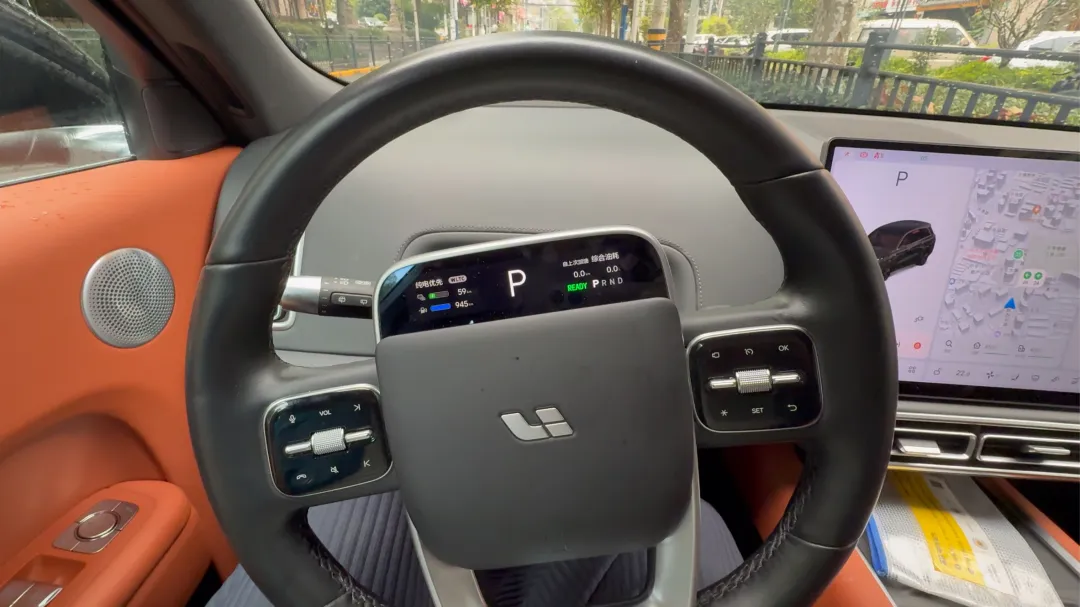
The cabin’s voice controls also made getting started much easier for a first-time EV driver. When I got in, I couldn’t figure out where to find many of the controls. But I could just ask: “How do I turn on driver assistance?” “Where are the buttons?” Even turning on the wipers or locking the car took only a voice command, with no digging through menus. At the destination, a simple one-touch automatic parking feature found a space and parked the car for me. One less thing to deal with.
Charging and Comfort: A Fridge, Screens, and Sofa Seats
The highway trip changed my view of charging and energy consumption quite a bit. I’d expected substantial losses from the extra conversion involved in burning gasoline to generate electricity and then using that electricity to drive a motor. In practice, a vehicle this big averaged only about 6 liters of gasoline per 100 km. Pretty economical.
Charging was an even bigger surprise. The battery alone offers roughly 200–300 km of range. Almost every highway service area on the way to Huangshan had chargers, and near the scenic area, charging spaces were everywhere we stopped to eat or park.
This was also the first time I’d ever handled a charging connector. It was much simpler than I’d imagined: scan a QR code with WeChat, take the connector off its holder, plug it in, and charging begins. We went for a meal at a service area and wandered back half an hour later. The battery had gone from somewhere in the teens to 85%. At 0.8–0.9 yuan per kWh, twenty-something yuan could cover about 200 km. Compared with gasoline, the cost was almost negligible. I finally understood why seemingly every ride-hailing car on the street is electric.
My biggest worry about EVs had always been getting somewhere in a hurry. With a gasoline car, you fill up in five minutes and leave. Waiting half an hour to charge sounded painful. But with enough charging infrastructure, you can plug in while eating or using the restroom at a service area. It doesn’t really cost you any extra time.
As for the cabin, I have to admit that the “fridge, TV, and big sofa” formula favored by China’s newer automakers works. With ventilated, heated, massaging seats, the car really is comfortable. It was tempting enough to make me wonder whether my mother should replace the old Audi she’s driven for more than a decade with an EV. It could make her everyday driving much more comfortable and less of a chore.
My one lingering concern is whether these newer automakers might follow the example of certain brands: make the fridge, screens, and seats look impressive while quietly cutting corners on the chassis and passive safety features.
When it comes to engineering fundamentals, I still feel Tesla is the most solid. But if my wife buys a car in the future, I’d probably look at Tesla, Xiaomi, Li Auto, XPeng, and NIO, and I’m open to others. The only automatic rejects are those “Jie” brands. They turn my stomach. Enough said.
An Occupational Hazard: Data Privacy and Ownership
That’s the fun part covered. Now for an occupational hazard of working with data: I can’t help thinking about data privacy and vehicle ownership.
To me, a modern smart EV is essentially a smartphone on four wheels, vacuuming up telemetry in the background. Location history is the obvious part. Footage from cameras inside and outside the car, microphone recordings, driving habits—all sorts of information, including things you might never think of, could be heading to the cloud.
The deeper issue is ownership. When the manufacturer can remotely monitor or even control a vehicle, that already diminishes, in a sense, your ownership of the physical asset. If it can arbitrarily restrict or even disable your car through the cloud, periodically force an over-the-air update on you, or put ads on the startup screen, is the car still 100% yours?
In practice, especially when I’m just renting a car for a few days away, these concerns don’t matter much to me. But if I’m paying for a car to keep and drive for years, they’re something I have to weigh.
We all trade privacy for convenience in modern life, and I’m fine with that bargain in principle. My line is clear: don’t get too greedy. Don’t behave like the rogue Android apps of years past, or cross the line as zcode did by secretly uploading users’ code repositories. I can accept some routine collection of driving data with sensitive details removed in exchange for the convenience of driver assistance and a smart cabin.
Where That Leaves Me
Three days and more than 400 km on this Huangshan road trip were enough to reset my assumptions about EVs.
Of course, the lack of charging anxiety had a lot to do with the destination. Huangshan is in the Jiangnan region of eastern China, where charging infrastructure is exceptionally well developed. If I were doing another 40-plus-day road trip through Xinjiang and Qinghai, or heading to northeastern China, I’d probably still stick with a gasoline-only car. But for most everyday driving and ordinary vacations, I’m now open to an EV.
If you’ve been driving one for years, try not to laugh. I’d honestly never tried one and couldn’t be bothered to figure it all out. This time I made the effort, learned something new, and enjoyed it. Next time I rent a car, I’ll probably try another EV brand and see what it does differently.