


Table of Contents
A chronological index of database essays, commentary, and case studies.
Timeline#
2026
- 360 Shipped Its Wildcard TLS Private Key Inside a Public Installer
- After the Debate, Let's Talk Seriously About 'Ontology'
- InsForge: A Supabase Built for Vibe Coding
- AI Survival Guide: Where the Biggest Arbitrage Really Is
- OpenClaw Hype: Foam on Top of the Productivity Revolution
- Palantir's Ontology Narrative
- MinIO Is Dead, Long Live MinIO
- When Coding Becomes Cheap, What Still Matters?
- The Agent Moat: Runtime
- AI Ripped the Skin Off Software
- New Programmers in the AI Era: Where Do You Go?
- The Great Software Meltdown: When Translation Layers Get Squashed
- Agent OS: We're Building DOS Again
- Claude Code Observability
- Claude Code Quick Start: Using Alternative LLMs at 1/10 the Cost
2025
- Data 2025: The year in review with Mike Stonebraker
- MySQL and Baijiu: The Internet’s Obedience Test
- Victoria: The Observability Stack That Slaps the Industry
- MinIO Is Dead. Who Picks Up the Pieces?
- MinIO is Dead
- When Answers Become Abundant, Questions Become the New Currency
- On Trusting Open-Source Supply Chains
- Don't Run Docker Postgres for Production!
- DDIA 2nd Edition, Chinese Translation
- Dongchedi Just Exposed “Smart Driving.” Where’s Our Dongku-Di?
- Google AI Toolbox: Production-Ready Database MCP is Here?
- Where Will Databases and DBAs Go in the AI Era?
- Stop Arguing, The AI Era Database Has Been Settled
- Scaling Postgres to the next level at OpenAI
- How Many Shops Has etcd Torched?
- In the AI Era, Software Starts at the Database
- MySQL vs. PostgreSQL @ 2025
- Database Planet Collision: When PG Falls for DuckDB
- Comparing Oracle and PostgreSQL Transaction Systems
- Database as Business Architecture
2024
- 7 Databases in 7 Weeks (2025)
- Self-Hosting Supabase on PostgreSQL
- Open-Source "Tyrant" Linus's Purge
- Optimize Bio Cores First, CPU Cores Second
- MongoDB Has No Future: Good Marketing Can't Save a Rotten Mango
- MongoDB: Now Powered by PostgreSQL?
- CVE-2024-6387 SSH Vulnerability Fix
- The $20 Brother PolarDB: What Should Databases Actually Cost?
- Can Chinese Domestic Databases Really Compete?
- Redis Going Non-Open-Source is a Disgrace to "Open-Source" and Public Cloud
2023
- MySQL's ACID is a real mess
- Database in K8S: Pros & Cons
- Are Specialized Vector Databases Dead?
- Are Databases Really Being Strangled?
- Which EL-Series OS Distribution Is Best?
- What Kind of Self-Reliance Do Infra Software Need?
- Back to Basics: Tech Reflection Chronicles
- Database Demand Hierarchy Pyramid
- NewSQL: Distributive Nonsens
2019
2018
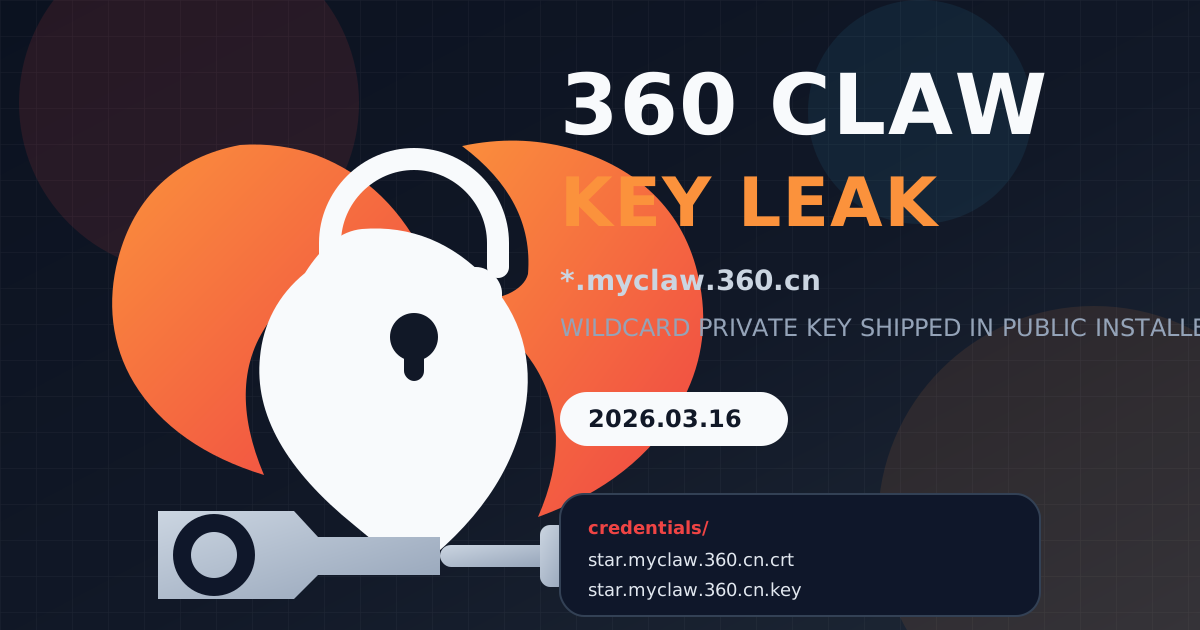
360 Shipped Its Wildcard TLS Private Key Inside a Public Installer
360’s newly released AI Agent product shipped a public installer containing the private key for its *.myclaw.360.cn wildcard certificate. Public verification and local reproduction also exposed inconsistencies in the OCSP revocation path.

After the Debate, Let's Talk Seriously About 'Ontology'
·3306 words·16 mins
Palantir’s Ontology is, technically, data modeling. The more interesting question is how a philosophy term got repurposed to market system integration and data modeling, and why that story is so likely to turn into another round of concept inflation in China’s tech ecosystem.
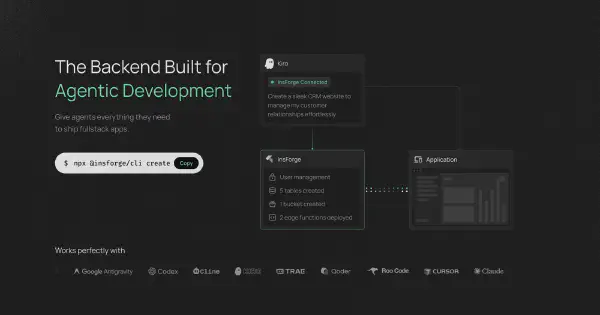
InsForge: A Supabase Built for Vibe Coding
·589 words·3 mins
InsForge tries to package PostgreSQL, auth, storage, deployment, and an MCP-facing semantic layer into a backend stack designed for AI agents. It feels like a Supabase rebuilt for the vibe-coding era.

AI Survival Guide: Where the Biggest Arbitrage Really Is
The biggest AI arbitrage available to ordinary users is not some obscure token play. It is the heavily subsidized max-tier subscription plans from frontier model vendors, provided you can convert that quota into real output.

OpenClaw Hype: Foam on Top of the Productivity Revolution
OpenClaw looks exciting because it turns agents into a chat-style experience. But the real productivity gains come from high-capability subscription agents and disciplined workflows, not from lobster-flavored wrappers.
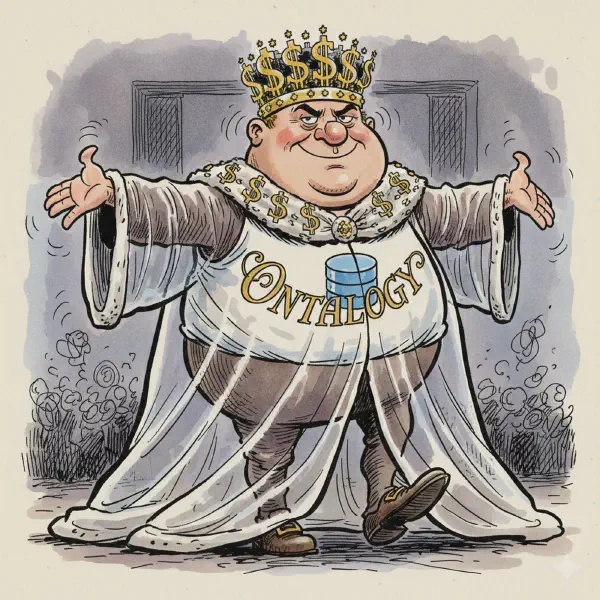
Palantir's Ontology Narrative
Ontology is largely a data-modeling method. In enterprise practice, much of it overlaps with familiar database concepts, while the framing can make it feel newer and more differentiated than it really is.

MinIO Is Dead, Long Live MinIO
·1723 words·9 mins
MinIO’s repo is officially archived and abandoned. And how AI Agents helped bring it back from the dead. This post explains how a community fork restores the admin console and ships binaries via CI/CD pipeline.

When Coding Becomes Cheap, What Still Matters?
·1144 words·6 mins
Codex 5.3 xHigh pushed my workflow past a tipping point: writing code is no longer the scarce resource. The real leverage is design quality and engineering acceptance. This is the practical loop I use to ship reliable software with AI agents.

The Agent Moat: Runtime
·1834 words·9 mins
A mediocre local who knows the terrain beats a genius parachuted into unknown territory. Intelligence without context is idle. An agent without a runtime is vapor.

AI Ripped the Skin Off Software
Software stocks are melting down. Who survives? Who rises? AI stripped away software’s skin, exposing the database skeleton underneath. The market isn’t panic-selling — it’s repricing.

New Programmers in the AI Era: Where Do You Go?
Should we still hire fresh grads? Squeezed between AI and senior devs, what’s the play for new programmers? Master the right tools, take initiative, find the right mentor.
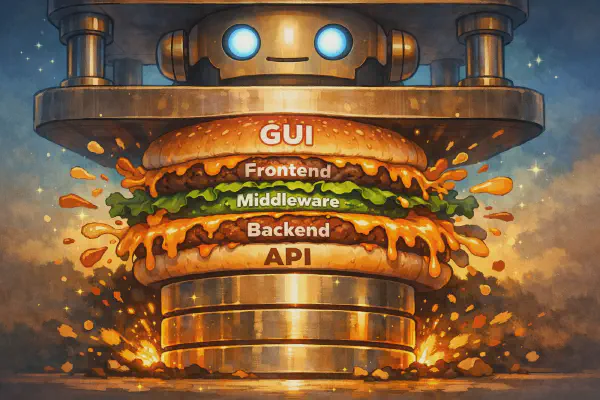
The Great Software Meltdown: When Translation Layers Get Squashed
·1412 words·7 mins
SaaS and workflow software are dead. From APPs & GUIs to Agents, Databases, and CLI.
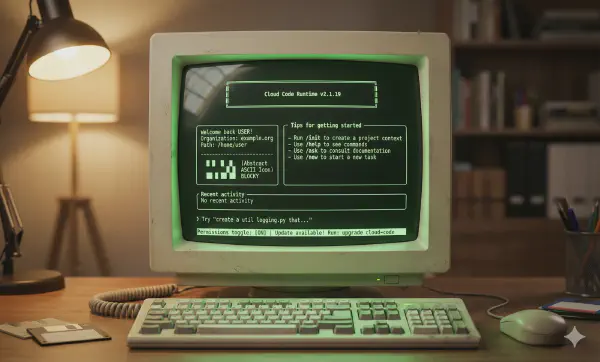
Agent OS: We're Building DOS Again
·3053 words·15 mins
LLM = CPU. Context = RAM. Database = Disk. Agent = App. The mapping is surprisingly clean. And if OS history is any guide, we may know what comes next — and what’s still missing.

Claude Code Observability
·655 words·4 mins
Yesterday I tweeted: “Built a Claude Code Grafana dashboard to see how it makes decisions, uses tools, and burns through API credits.” Didn’t expect so much interest.
So let’s talk about Claude Code observability.

Claude Code Quick Start: Using Alternative LLMs at 1/10 the Cost
How to install and use Claude Code? How to achieve similar results at 1/10 of Claude’s cost with alternative models? A one-liner to get CC up and running!

Data 2025: The year in review with Mike Stonebraker
A conversation between Mike Stonebraker (MIT CSAIL, Turing Award Winner, Creator of PostgreSQL), Andy Pavlo (Carnegie Mellon University), and the DBOS team.

MySQL and Baijiu: The Internet’s Obedience Test
MySQL is to the internet what baijiu is to China: harsh, hard to swallow, yet worshipped because culture demands obedience. Both are loyalty tests—will you endure discomfort to fit in?

Victoria: The Observability Stack That Slaps the Industry
·645 words·4 mins
VictoriaMetrics is brutally efficient—using a fraction of Prometheus + Loki’s resources for multiples of the performance. Pigsty v4 swaps to the Victoria stack; here’s the beta for anyone eager to try it.
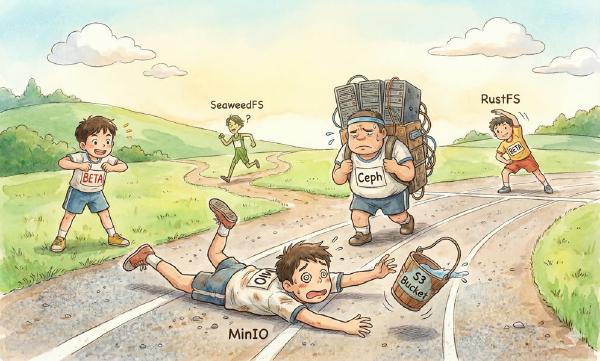
MinIO Is Dead. Who Picks Up the Pieces?
MinIO just entered maintenance mode. What replaces it? Can RustFS step in? I tested the contenders so you don’t have to.
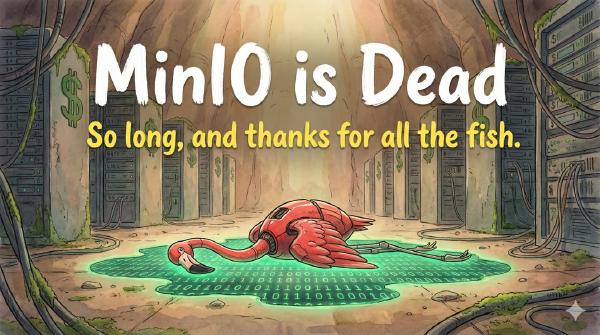
MinIO is Dead
·1734 words·9 mins
MinIO announces it is entering maintenance mode, the dragon-slayer has become the dragon – how MinIO transformed from an open-source S3 alternative to just another commercial software company

When Answers Become Abundant, Questions Become the New Currency
·1679 words·4 mins
Your ability to ask questions—and your taste in what to ask—determines your position in the AI era. When answers become commodities, good questions become the new wealth. We are living in the moment this prophecy comes true.

On Trusting Open-Source Supply Chains
·750 words·4 mins
In serious production you can’t rely on an upstream that explicitly says “no guarantees.” When someone says “don’t count on me,” the right answer is “then I’ll run it myself.”
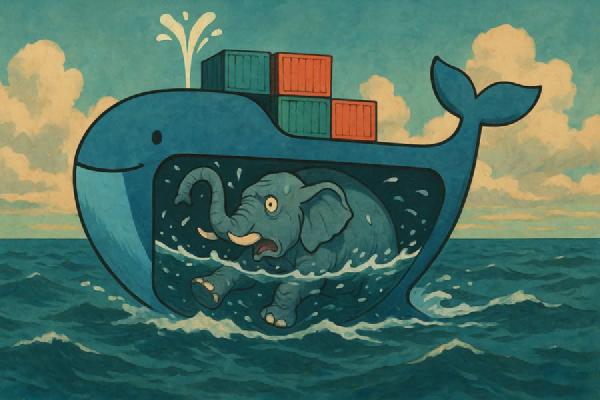
Don't Run Docker Postgres for Production!
·1876 words·9 mins
Tons of users running the official docker postgres image got burned during recent minor version upgrades. A friendly reminder: think twice before containerizing production databases.

DDIA 2nd Edition, Chinese Translation
·569 words·3 mins
The second edition of Designing Data-Intensive Applications has released ten chapters. I translated them into Chinese and rebuilt a clean Hugo/Hextra web version for the community.

Column: Database Guru
·488 words·1 min
The database world is full of hype and marketing fog. This column cuts through it with blunt commentary, case studies, and technical deep dives.

Dongchedi Just Exposed “Smart Driving.” Where’s Our Dongku-Di?
·614 words·2 mins
Imagine a “closed-course” shootout for domestic databases and clouds, the way Dongchedi just humiliated 30+ autonomous cars. This industry needs its own stress test.
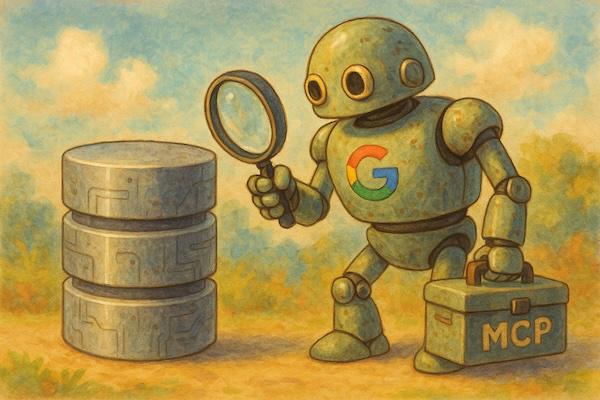
Google AI Toolbox: Production-Ready Database MCP is Here?
·1224 words·6 mins
Google recently launched a database MCP toolbox, perhaps the first production-ready solution.

Where Will Databases and DBAs Go in the AI Era?
Who will be revolutionized first - OLTP or OLAP? Integration vs specialization, how to choose? Where will DBAs go in the AI era? Feng’s views from the HOW 2025 conference roundtable, organized and published.

Stop Arguing, The AI Era Database Has Been Settled
·1618 words·8 mins
The database for the AI era has been settled. Capital markets are making intensive moves on PostgreSQL targets, with PG having become the default database for the AI era.

Scaling Postgres to the next level at OpenAI
At PGConf.Dev 2025, Bohan Zhang from OpenAI shared a session titled Scaling Postgres to the next level at OpenAI, giving us a peek into the database usage of a top-tier unicorn.
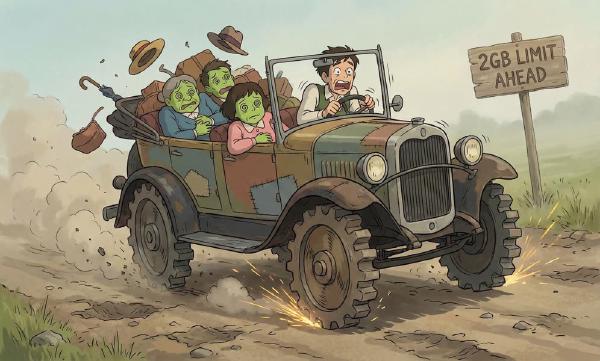
How Many Shops Has etcd Torched?
Plenty. If you’re rolling your own Kubernetes, odds are you’ll crash because etcd ships with a 2 GB time bomb.
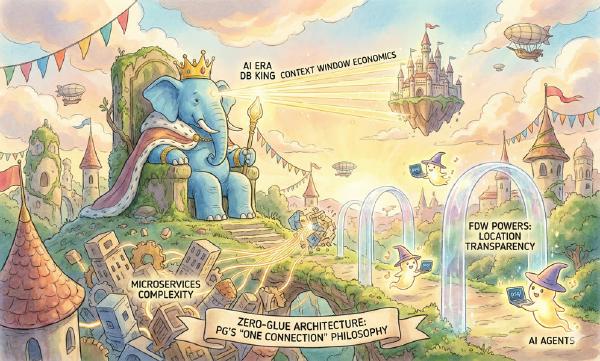
In the AI Era, Software Starts at the Database
·796 words·4 mins
Future software = Agent + Database. No middle tiers, just agents issuing CRUD. Database skills age well, and PostgreSQL is poised to be the agent-era default.

MySQL vs. PostgreSQL @ 2025
·1826 words·4 mins
A 2025 reality check on where PostgreSQL stands relative to MySQL across features, performance, quality, and ecosystem.

Database Planet Collision: When PG Falls for DuckDB
·1512 words·8 mins
If you ask me, we’re on the brink of a cosmic collision in database-land, and Postgres + DuckDB is the meteor we should all be watching.

Comparing Oracle and PostgreSQL Transaction Systems
The PG community has started punching up: Cybertec’s Laurenz Albe breaks down how Oracle’s transaction system stacks against PostgreSQL.

Database as Business Architecture
·1836 words·9 mins
Databases are the core of business architecture, but what happens if we go further and let databases become the business architecture itself?

7 Databases in 7 Weeks (2025)
Is PostgreSQL the king of boring databases? Here are seven databases worth studying in 2025: PostgreSQL, SQLite, DuckDB, ClickHouse, FoundationDB, TigerBeetle, and CockroachDB—each deserving a week of deep exploration.

Self-Hosting Supabase on PostgreSQL
Supabase is great, own your own Supabase is even better. A tutorial for self-hosting production-grade supabase on local/cloud/ VM/BMs.
Open-Source "Tyrant" Linus's Purge
·970 words·5 mins
The Linux community is essentially imperial — and Linus himself is the earliest and most successful technical dictator. People are used to Linus’s generosity but forget this point.
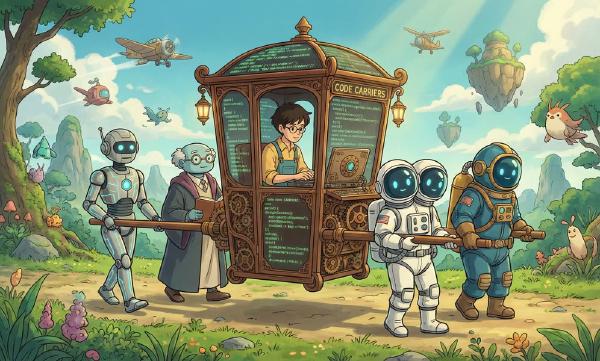
Optimize Bio Cores First, CPU Cores Second
Programmers are expensive, scarce biological computing cores, the anchor point of software costs — please prioritize optimizing biological cores before optimizing CPU cores.
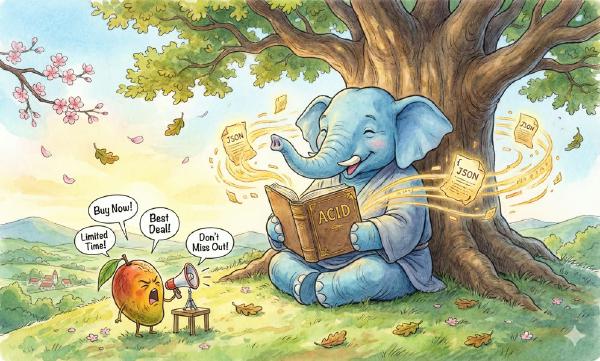
MongoDB Has No Future: Good Marketing Can't Save a Rotten Mango
·2405 words·12 mins
MongoDB has a terrible track record on integrity, lackluster products and technology, gets beaten by PG in correctness, performance, and functionality, with collapsing developer reputation, declining popularity, stock price halving, and expanding losses. Provocative marketing against PG can’t save it with “good marketing.”

MongoDB: Now Powered by PostgreSQL?
·9663 words·46 mins
MongoDB 3.2’s analytics subsystem turned out to be an embedded PostgreSQL database? A whistleblowing story from MongoDB’s partner about betrayal and disillusionment.
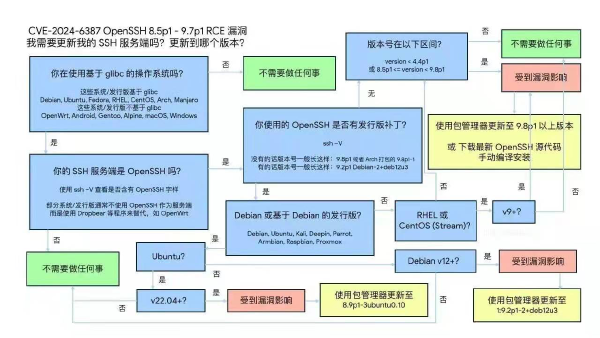
CVE-2024-6387 SSH Vulnerability Fix
·194 words·1 min
This vulnerability affects EL9, Ubuntu 22.04, Debian 12. Users should promptly update OpenSSH to fix this vulnerability.

Can Chinese Domestic Databases Really Compete?
·1963 words·10 mins
Friends often ask me, can Chinese domestic databases really compete? To be honest, it’s a question that offends people. So let’s try speaking with data - I hope the charts provided in this article can help readers understand the database ecosystem landscape and establish more accurate proportional awareness.

The $20 Brother PolarDB: What Should Databases Actually Cost?
·2593 words·13 mins
Today we discuss the fair pricing of commercial databases, open-source databases, cloud databases, and domestic Chinese databases.

Redis Going Non-Open-Source is a Disgrace to "Open-Source" and Public Cloud
·2090 words·5 mins
Redis “going non-open source” is not a disgrace to Redis, but a disgrace to “open source/OSI” and even more so to public cloud. What truly matters has always been software freedom, while open source is just one means to achieve software freedom.
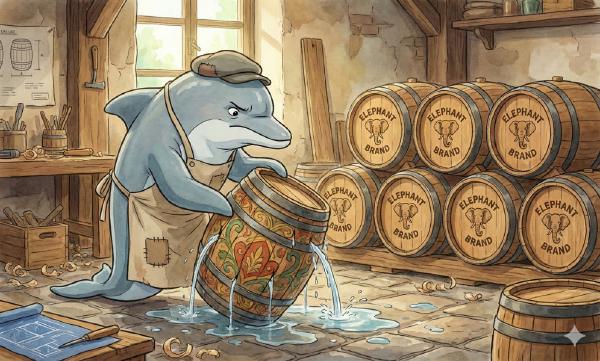
MySQL's ACID is a real mess
MySQL’s transaction ACID has flaws and doesn’t match documentation promises. This may lead to serious correctness issues - use with caution.

Database in K8S: Pros & Cons
·2428 words·12 mins
Whether databases should be housed in Kubernetes/Docker remains highly controversial. It has fundamental drawbacks with stateful services.
Are Specialized Vector Databases Dead?
·1835 words·9 mins
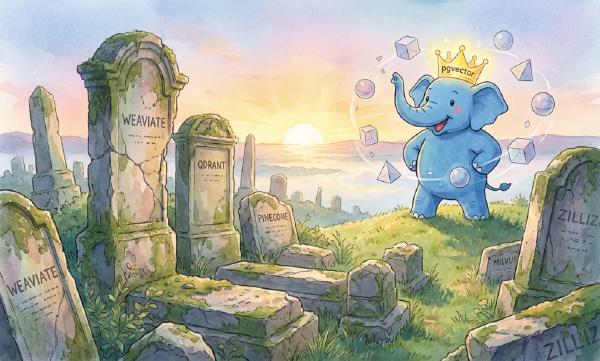
Vector storage and retrieval is a real need, but specialized vector databases are already dead. Small needs are solved by OpenAI directly, standard needs are captured by existing mature databases with vector extensions. The ecological niche left for specialized vector databases might support one company, but trying to build an industry around AI stories is impossible.

Are Databases Really Being Strangled?
·2234 words·11 mins
Many “domestic databases” are just shoddy, inferior products that can’t be helped. Xinchuang domestic OS/databases are essentially IT pre-made meals in schools. Users hold their noses while migrating, developers pretend to work hard, and everyone plays along with leaders who neither understand nor care about technology. The infrastructure software industry isn’t being strangled by anyone - the real chokehold comes from the so-called “insiders.”

Which EL-Series OS Distribution Is Best?
·1591 words·4 mins
RHEL-series OS distribution compatibility level: RHEL = Rocky ≈ Anolis > Alma > Oracle » Euler. Recommend using RockyLinux 8.8, or Anolis 8.8 for domestic requirements.

What Kind of Self-Reliance Do Infra Software Need?
·1256 words·3 mins
When we talk about self-reliance and control, what are we really talking about? Operational self-reliance vs. R&D self-reliance - what nations/users truly need is the former, not flashy “self-research”.
Back to Basics: Tech Reflection Chronicles
·821 words·2 mins
The cost-cutting imperative has triggered a reevaluation of all technologies, including databases. This series critiques hot DB technologies and poses fundamental questions about their trade-offs: Are cloud databases, distributed databases, microservices, and containerization real needs or false hype?

Database Demand Hierarchy Pyramid
·1669 words·8 mins
Similar to Maslow’s hierarchy of needs, user demands for databases also have a progressive hierarchy: physiological needs, safety needs, belonging needs, esteem needs, cognitive needs, aesthetic needs, self-actualization needs, and transcendence needs.

NewSQL: Distributive Nonsens
As hardware technology advances, the capacity and performance of standalone databases have reached unprecedented heights. which makes distributed (TP) databases appear utterly powerless, much like the “data middle platform,” donning the emperor’s new clothes in a state of self-deception.

Is running postgres in docker a good idea?
Thou shalt not run a prod database inside a container

Understanding Time - Leap Years, Leap Seconds, Time and Time Zones
·3220 words·7 mins
A proper understanding of time is very helpful for correctly handling time-related issues in work and life. For example, time representation and processing in computers, as well as time handling in databases and programming languages.

Understanding Character Encoding Principles
Without understanding the basic principles of character encoding, even simple string operations like comparison, sorting, and random access can easily lead you into pitfalls. This article attempts to clarify these issues through a comprehensive explanation.

Concurrency Anomalies Explained
·6114 words·29 mins
Concurrent programs are hard to write correctly and even harder to write well. Many programmers simply throw these problems at the database… But even the most sophisticated databases won’t help if you don’t understand concurrency anomalies and isolation levels.

Blockchain and Distributed Databases
·537 words·3 mins
The technical essence, functionality, and evolution of blockchain is distributed databases. Specifically, it’s a Byzantine Fault Tolerant (resistant to malicious node attacks) distributed (leaderless replication) database.
Consistency: An Overloaded Term
·655 words·4 mins
The term “consistency” is heavily overloaded, representing different concepts in different contexts. For example, the C in ACID and the C in CAP actually refer to different concepts.

Why Study Database Principles
·2132 words·11 mins
Those who only know how to code are just programmers; learn databases well, and you can at least make a living; but for excellent engineers, merely using databases is far from enough.
360 Shipped Its Wildcard TLS Private Key Inside a Public Installer
360’s newly released AI Agent product shipped a public installer containing the private key for its *.myclaw.360.cn wildcard certificate. Public verification and local reproduction also exposed inconsistencies in the OCSP revocation path.
After the Debate, Let's Talk Seriously About 'Ontology'
·3306 words·16 mins
Palantir’s Ontology is, technically, data modeling. The more interesting question is how a philosophy term got repurposed to market system integration and data modeling, and why that story is so likely to turn into another round of concept inflation in China’s tech ecosystem.
InsForge: A Supabase Built for Vibe Coding
·589 words·3 mins
InsForge tries to package PostgreSQL, auth, storage, deployment, and an MCP-facing semantic layer into a backend stack designed for AI agents. It feels like a Supabase rebuilt for the vibe-coding era.
AI Survival Guide: Where the Biggest Arbitrage Really Is
The biggest AI arbitrage available to ordinary users is not some obscure token play. It is the heavily subsidized max-tier subscription plans from frontier model vendors, provided you can convert that quota into real output.
OpenClaw Hype: Foam on Top of the Productivity Revolution
OpenClaw looks exciting because it turns agents into a chat-style experience. But the real productivity gains come from high-capability subscription agents and disciplined workflows, not from lobster-flavored wrappers.
Palantir's Ontology Narrative
Ontology is largely a data-modeling method. In enterprise practice, much of it overlaps with familiar database concepts, while the framing can make it feel newer and more differentiated than it really is.
MinIO Is Dead, Long Live MinIO
·1723 words·9 mins
MinIO’s repo is officially archived and abandoned. And how AI Agents helped bring it back from the dead. This post explains how a community fork restores the admin console and ships binaries via CI/CD pipeline.
When Coding Becomes Cheap, What Still Matters?
·1144 words·6 mins
Codex 5.3 xHigh pushed my workflow past a tipping point: writing code is no longer the scarce resource. The real leverage is design quality and engineering acceptance. This is the practical loop I use to ship reliable software with AI agents.
The Agent Moat: Runtime
·1834 words·9 mins
A mediocre local who knows the terrain beats a genius parachuted into unknown territory. Intelligence without context is idle. An agent without a runtime is vapor.
AI Ripped the Skin Off Software
Software stocks are melting down. Who survives? Who rises? AI stripped away software’s skin, exposing the database skeleton underneath. The market isn’t panic-selling — it’s repricing.
New Programmers in the AI Era: Where Do You Go?
Should we still hire fresh grads? Squeezed between AI and senior devs, what’s the play for new programmers? Master the right tools, take initiative, find the right mentor.
The Great Software Meltdown: When Translation Layers Get Squashed
·1412 words·7 mins
SaaS and workflow software are dead. From APPs & GUIs to Agents, Databases, and CLI.
Agent OS: We're Building DOS Again
·3053 words·15 mins
LLM = CPU. Context = RAM. Database = Disk. Agent = App. The mapping is surprisingly clean. And if OS history is any guide, we may know what comes next — and what’s still missing.
Claude Code Observability
·655 words·4 mins
Yesterday I tweeted: “Built a Claude Code Grafana dashboard to see how it makes decisions, uses tools, and burns through API credits.” Didn’t expect so much interest.
So let’s talk about Claude Code observability.
Claude Code Quick Start: Using Alternative LLMs at 1/10 the Cost
How to install and use Claude Code? How to achieve similar results at 1/10 of Claude’s cost with alternative models? A one-liner to get CC up and running!
Data 2025: The year in review with Mike Stonebraker
A conversation between Mike Stonebraker (MIT CSAIL, Turing Award Winner, Creator of PostgreSQL), Andy Pavlo (Carnegie Mellon University), and the DBOS team.
MySQL and Baijiu: The Internet’s Obedience Test
MySQL is to the internet what baijiu is to China: harsh, hard to swallow, yet worshipped because culture demands obedience. Both are loyalty tests—will you endure discomfort to fit in?
Victoria: The Observability Stack That Slaps the Industry
·645 words·4 mins
VictoriaMetrics is brutally efficient—using a fraction of Prometheus + Loki’s resources for multiples of the performance. Pigsty v4 swaps to the Victoria stack; here’s the beta for anyone eager to try it.
MinIO Is Dead. Who Picks Up the Pieces?
MinIO just entered maintenance mode. What replaces it? Can RustFS step in? I tested the contenders so you don’t have to.
MinIO is Dead
·1734 words·9 mins
MinIO announces it is entering maintenance mode, the dragon-slayer has become the dragon – how MinIO transformed from an open-source S3 alternative to just another commercial software company
When Answers Become Abundant, Questions Become the New Currency
·1679 words·4 mins
Your ability to ask questions—and your taste in what to ask—determines your position in the AI era. When answers become commodities, good questions become the new wealth. We are living in the moment this prophecy comes true.
On Trusting Open-Source Supply Chains
·750 words·4 mins
In serious production you can’t rely on an upstream that explicitly says “no guarantees.” When someone says “don’t count on me,” the right answer is “then I’ll run it myself.”
Don't Run Docker Postgres for Production!
·1876 words·9 mins
Tons of users running the official docker postgres image got burned during recent minor version upgrades. A friendly reminder: think twice before containerizing production databases.
DDIA 2nd Edition, Chinese Translation
·569 words·3 mins
The second edition of Designing Data-Intensive Applications has released ten chapters. I translated them into Chinese and rebuilt a clean Hugo/Hextra web version for the community.
Column: Database Guru
·488 words·1 min
The database world is full of hype and marketing fog. This column cuts through it with blunt commentary, case studies, and technical deep dives.
Dongchedi Just Exposed “Smart Driving.” Where’s Our Dongku-Di?
·614 words·2 mins
Imagine a “closed-course” shootout for domestic databases and clouds, the way Dongchedi just humiliated 30+ autonomous cars. This industry needs its own stress test.
Google AI Toolbox: Production-Ready Database MCP is Here?
·1224 words·6 mins
Google recently launched a database MCP toolbox, perhaps the first production-ready solution.
Where Will Databases and DBAs Go in the AI Era?
Who will be revolutionized first - OLTP or OLAP? Integration vs specialization, how to choose? Where will DBAs go in the AI era? Feng’s views from the HOW 2025 conference roundtable, organized and published.
Stop Arguing, The AI Era Database Has Been Settled
·1618 words·8 mins
The database for the AI era has been settled. Capital markets are making intensive moves on PostgreSQL targets, with PG having become the default database for the AI era.
Scaling Postgres to the next level at OpenAI
At PGConf.Dev 2025, Bohan Zhang from OpenAI shared a session titled Scaling Postgres to the next level at OpenAI, giving us a peek into the database usage of a top-tier unicorn.
How Many Shops Has etcd Torched?
Plenty. If you’re rolling your own Kubernetes, odds are you’ll crash because etcd ships with a 2 GB time bomb.
In the AI Era, Software Starts at the Database
·796 words·4 mins
Future software = Agent + Database. No middle tiers, just agents issuing CRUD. Database skills age well, and PostgreSQL is poised to be the agent-era default.
MySQL vs. PostgreSQL @ 2025
·1826 words·4 mins
A 2025 reality check on where PostgreSQL stands relative to MySQL across features, performance, quality, and ecosystem.
Database Planet Collision: When PG Falls for DuckDB
·1512 words·8 mins
If you ask me, we’re on the brink of a cosmic collision in database-land, and Postgres + DuckDB is the meteor we should all be watching.
Comparing Oracle and PostgreSQL Transaction Systems
The PG community has started punching up: Cybertec’s Laurenz Albe breaks down how Oracle’s transaction system stacks against PostgreSQL.
Database as Business Architecture
·1836 words·9 mins
Databases are the core of business architecture, but what happens if we go further and let databases become the business architecture itself?
7 Databases in 7 Weeks (2025)
Is PostgreSQL the king of boring databases? Here are seven databases worth studying in 2025: PostgreSQL, SQLite, DuckDB, ClickHouse, FoundationDB, TigerBeetle, and CockroachDB—each deserving a week of deep exploration.
Self-Hosting Supabase on PostgreSQL
Supabase is great, own your own Supabase is even better. A tutorial for self-hosting production-grade supabase on local/cloud/ VM/BMs.
Open-Source "Tyrant" Linus's Purge
·970 words·5 mins
The Linux community is essentially imperial — and Linus himself is the earliest and most successful technical dictator. People are used to Linus’s generosity but forget this point.
Optimize Bio Cores First, CPU Cores Second
Programmers are expensive, scarce biological computing cores, the anchor point of software costs — please prioritize optimizing biological cores before optimizing CPU cores.
MongoDB Has No Future: Good Marketing Can't Save a Rotten Mango
·2405 words·12 mins
MongoDB has a terrible track record on integrity, lackluster products and technology, gets beaten by PG in correctness, performance, and functionality, with collapsing developer reputation, declining popularity, stock price halving, and expanding losses. Provocative marketing against PG can’t save it with “good marketing.”
MongoDB: Now Powered by PostgreSQL?
·9663 words·46 mins
MongoDB 3.2’s analytics subsystem turned out to be an embedded PostgreSQL database? A whistleblowing story from MongoDB’s partner about betrayal and disillusionment.
CVE-2024-6387 SSH Vulnerability Fix
·194 words·1 min
This vulnerability affects EL9, Ubuntu 22.04, Debian 12. Users should promptly update OpenSSH to fix this vulnerability.
Can Chinese Domestic Databases Really Compete?
·1963 words·10 mins
Friends often ask me, can Chinese domestic databases really compete? To be honest, it’s a question that offends people. So let’s try speaking with data - I hope the charts provided in this article can help readers understand the database ecosystem landscape and establish more accurate proportional awareness.
The $20 Brother PolarDB: What Should Databases Actually Cost?
·2593 words·13 mins
Today we discuss the fair pricing of commercial databases, open-source databases, cloud databases, and domestic Chinese databases.
Redis Going Non-Open-Source is a Disgrace to "Open-Source" and Public Cloud
·2090 words·5 mins
Redis “going non-open source” is not a disgrace to Redis, but a disgrace to “open source/OSI” and even more so to public cloud. What truly matters has always been software freedom, while open source is just one means to achieve software freedom.
MySQL's ACID is a real mess
MySQL’s transaction ACID has flaws and doesn’t match documentation promises. This may lead to serious correctness issues - use with caution.
Database in K8S: Pros & Cons
·2428 words·12 mins
Whether databases should be housed in Kubernetes/Docker remains highly controversial. It has fundamental drawbacks with stateful services.
Are Specialized Vector Databases Dead?
·1835 words·9 mins
Vector storage and retrieval is a real need, but specialized vector databases are already dead. Small needs are solved by OpenAI directly, standard needs are captured by existing mature databases with vector extensions. The ecological niche left for specialized vector databases might support one company, but trying to build an industry around AI stories is impossible.
Are Databases Really Being Strangled?
·2234 words·11 mins
Many “domestic databases” are just shoddy, inferior products that can’t be helped. Xinchuang domestic OS/databases are essentially IT pre-made meals in schools. Users hold their noses while migrating, developers pretend to work hard, and everyone plays along with leaders who neither understand nor care about technology. The infrastructure software industry isn’t being strangled by anyone - the real chokehold comes from the so-called “insiders.”
Which EL-Series OS Distribution Is Best?
·1591 words·4 mins
RHEL-series OS distribution compatibility level: RHEL = Rocky ≈ Anolis > Alma > Oracle » Euler. Recommend using RockyLinux 8.8, or Anolis 8.8 for domestic requirements.
What Kind of Self-Reliance Do Infra Software Need?
·1256 words·3 mins
When we talk about self-reliance and control, what are we really talking about? Operational self-reliance vs. R&D self-reliance - what nations/users truly need is the former, not flashy “self-research”.
Back to Basics: Tech Reflection Chronicles
·821 words·2 mins
The cost-cutting imperative has triggered a reevaluation of all technologies, including databases. This series critiques hot DB technologies and poses fundamental questions about their trade-offs: Are cloud databases, distributed databases, microservices, and containerization real needs or false hype?
Database Demand Hierarchy Pyramid
·1669 words·8 mins
Similar to Maslow’s hierarchy of needs, user demands for databases also have a progressive hierarchy: physiological needs, safety needs, belonging needs, esteem needs, cognitive needs, aesthetic needs, self-actualization needs, and transcendence needs.
NewSQL: Distributive Nonsens
As hardware technology advances, the capacity and performance of standalone databases have reached unprecedented heights. which makes distributed (TP) databases appear utterly powerless, much like the “data middle platform,” donning the emperor’s new clothes in a state of self-deception.
Is running postgres in docker a good idea?
Thou shalt not run a prod database inside a container
Understanding Time - Leap Years, Leap Seconds, Time and Time Zones
·3220 words·7 mins
A proper understanding of time is very helpful for correctly handling time-related issues in work and life. For example, time representation and processing in computers, as well as time handling in databases and programming languages.
Understanding Character Encoding Principles
Without understanding the basic principles of character encoding, even simple string operations like comparison, sorting, and random access can easily lead you into pitfalls. This article attempts to clarify these issues through a comprehensive explanation.
Concurrency Anomalies Explained
·6114 words·29 mins
Concurrent programs are hard to write correctly and even harder to write well. Many programmers simply throw these problems at the database… But even the most sophisticated databases won’t help if you don’t understand concurrency anomalies and isolation levels.
Blockchain and Distributed Databases
·537 words·3 mins
The technical essence, functionality, and evolution of blockchain is distributed databases. Specifically, it’s a Byzantine Fault Tolerant (resistant to malicious node attacks) distributed (leaderless replication) database.
Consistency: An Overloaded Term
·655 words·4 mins
The term “consistency” is heavily overloaded, representing different concepts in different contexts. For example, the C in ACID and the C in CAP actually refer to different concepts.
Why Study Database Principles
·2132 words·11 mins
Those who only know how to code are just programmers; learn databases well, and you can at least make a living; but for excellent engineers, merely using databases is far from enough.
360 Shipped Its Wildcard TLS Private Key Inside a Public Installer
360’s newly released AI Agent product shipped a public installer containing the private key for its *.myclaw.360.cn wildcard certificate. Public verification and local reproduction also exposed inconsistencies in the OCSP revocation path.
After the Debate, Let's Talk Seriously About 'Ontology'
·3306 words·16 mins
Palantir’s Ontology is, technically, data modeling. The more interesting question is how a philosophy term got repurposed to market system integration and data modeling, and why that story is so likely to turn into another round of concept inflation in China’s tech ecosystem.
InsForge: A Supabase Built for Vibe Coding
·589 words·3 mins
InsForge tries to package PostgreSQL, auth, storage, deployment, and an MCP-facing semantic layer into a backend stack designed for AI agents. It feels like a Supabase rebuilt for the vibe-coding era.
AI Survival Guide: Where the Biggest Arbitrage Really Is
The biggest AI arbitrage available to ordinary users is not some obscure token play. It is the heavily subsidized max-tier subscription plans from frontier model vendors, provided you can convert that quota into real output.
OpenClaw Hype: Foam on Top of the Productivity Revolution
OpenClaw looks exciting because it turns agents into a chat-style experience. But the real productivity gains come from high-capability subscription agents and disciplined workflows, not from lobster-flavored wrappers.
Palantir's Ontology Narrative
Ontology is largely a data-modeling method. In enterprise practice, much of it overlaps with familiar database concepts, while the framing can make it feel newer and more differentiated than it really is.
MinIO Is Dead, Long Live MinIO
·1723 words·9 mins
MinIO’s repo is officially archived and abandoned. And how AI Agents helped bring it back from the dead. This post explains how a community fork restores the admin console and ships binaries via CI/CD pipeline.
When Coding Becomes Cheap, What Still Matters?
·1144 words·6 mins
Codex 5.3 xHigh pushed my workflow past a tipping point: writing code is no longer the scarce resource. The real leverage is design quality and engineering acceptance. This is the practical loop I use to ship reliable software with AI agents.
The Agent Moat: Runtime
·1834 words·9 mins
A mediocre local who knows the terrain beats a genius parachuted into unknown territory. Intelligence without context is idle. An agent without a runtime is vapor.
AI Ripped the Skin Off Software
Software stocks are melting down. Who survives? Who rises? AI stripped away software’s skin, exposing the database skeleton underneath. The market isn’t panic-selling — it’s repricing.
New Programmers in the AI Era: Where Do You Go?
Should we still hire fresh grads? Squeezed between AI and senior devs, what’s the play for new programmers? Master the right tools, take initiative, find the right mentor.
The Great Software Meltdown: When Translation Layers Get Squashed
·1412 words·7 mins
SaaS and workflow software are dead. From APPs & GUIs to Agents, Databases, and CLI.
Agent OS: We're Building DOS Again
·3053 words·15 mins
LLM = CPU. Context = RAM. Database = Disk. Agent = App. The mapping is surprisingly clean. And if OS history is any guide, we may know what comes next — and what’s still missing.
Claude Code Observability
·655 words·4 mins
Yesterday I tweeted: “Built a Claude Code Grafana dashboard to see how it makes decisions, uses tools, and burns through API credits.” Didn’t expect so much interest.
So let’s talk about Claude Code observability.
Claude Code Quick Start: Using Alternative LLMs at 1/10 the Cost
How to install and use Claude Code? How to achieve similar results at 1/10 of Claude’s cost with alternative models? A one-liner to get CC up and running!
Data 2025: The year in review with Mike Stonebraker
A conversation between Mike Stonebraker (MIT CSAIL, Turing Award Winner, Creator of PostgreSQL), Andy Pavlo (Carnegie Mellon University), and the DBOS team.
MySQL and Baijiu: The Internet’s Obedience Test
MySQL is to the internet what baijiu is to China: harsh, hard to swallow, yet worshipped because culture demands obedience. Both are loyalty tests—will you endure discomfort to fit in?
Victoria: The Observability Stack That Slaps the Industry
·645 words·4 mins
VictoriaMetrics is brutally efficient—using a fraction of Prometheus + Loki’s resources for multiples of the performance. Pigsty v4 swaps to the Victoria stack; here’s the beta for anyone eager to try it.
MinIO Is Dead. Who Picks Up the Pieces?
MinIO just entered maintenance mode. What replaces it? Can RustFS step in? I tested the contenders so you don’t have to.
MinIO is Dead
·1734 words·9 mins
MinIO announces it is entering maintenance mode, the dragon-slayer has become the dragon – how MinIO transformed from an open-source S3 alternative to just another commercial software company
When Answers Become Abundant, Questions Become the New Currency
·1679 words·4 mins
Your ability to ask questions—and your taste in what to ask—determines your position in the AI era. When answers become commodities, good questions become the new wealth. We are living in the moment this prophecy comes true.
On Trusting Open-Source Supply Chains
·750 words·4 mins
In serious production you can’t rely on an upstream that explicitly says “no guarantees.” When someone says “don’t count on me,” the right answer is “then I’ll run it myself.”
Don't Run Docker Postgres for Production!
·1876 words·9 mins
Tons of users running the official docker postgres image got burned during recent minor version upgrades. A friendly reminder: think twice before containerizing production databases.
DDIA 2nd Edition, Chinese Translation
·569 words·3 mins
The second edition of Designing Data-Intensive Applications has released ten chapters. I translated them into Chinese and rebuilt a clean Hugo/Hextra web version for the community.
Column: Database Guru
·488 words·1 min
The database world is full of hype and marketing fog. This column cuts through it with blunt commentary, case studies, and technical deep dives.
Dongchedi Just Exposed “Smart Driving.” Where’s Our Dongku-Di?
·614 words·2 mins
Imagine a “closed-course” shootout for domestic databases and clouds, the way Dongchedi just humiliated 30+ autonomous cars. This industry needs its own stress test.
Google AI Toolbox: Production-Ready Database MCP is Here?
·1224 words·6 mins
Google recently launched a database MCP toolbox, perhaps the first production-ready solution.
Where Will Databases and DBAs Go in the AI Era?
Who will be revolutionized first - OLTP or OLAP? Integration vs specialization, how to choose? Where will DBAs go in the AI era? Feng’s views from the HOW 2025 conference roundtable, organized and published.
Stop Arguing, The AI Era Database Has Been Settled
·1618 words·8 mins
The database for the AI era has been settled. Capital markets are making intensive moves on PostgreSQL targets, with PG having become the default database for the AI era.
Scaling Postgres to the next level at OpenAI
At PGConf.Dev 2025, Bohan Zhang from OpenAI shared a session titled Scaling Postgres to the next level at OpenAI, giving us a peek into the database usage of a top-tier unicorn.
How Many Shops Has etcd Torched?
Plenty. If you’re rolling your own Kubernetes, odds are you’ll crash because etcd ships with a 2 GB time bomb.
In the AI Era, Software Starts at the Database
·796 words·4 mins
Future software = Agent + Database. No middle tiers, just agents issuing CRUD. Database skills age well, and PostgreSQL is poised to be the agent-era default.
MySQL vs. PostgreSQL @ 2025
·1826 words·4 mins
A 2025 reality check on where PostgreSQL stands relative to MySQL across features, performance, quality, and ecosystem.
Database Planet Collision: When PG Falls for DuckDB
·1512 words·8 mins
If you ask me, we’re on the brink of a cosmic collision in database-land, and Postgres + DuckDB is the meteor we should all be watching.
Comparing Oracle and PostgreSQL Transaction Systems
The PG community has started punching up: Cybertec’s Laurenz Albe breaks down how Oracle’s transaction system stacks against PostgreSQL.
Database as Business Architecture
·1836 words·9 mins
Databases are the core of business architecture, but what happens if we go further and let databases become the business architecture itself?
7 Databases in 7 Weeks (2025)
Is PostgreSQL the king of boring databases? Here are seven databases worth studying in 2025: PostgreSQL, SQLite, DuckDB, ClickHouse, FoundationDB, TigerBeetle, and CockroachDB—each deserving a week of deep exploration.
Self-Hosting Supabase on PostgreSQL
Supabase is great, own your own Supabase is even better. A tutorial for self-hosting production-grade supabase on local/cloud/ VM/BMs.
Open-Source "Tyrant" Linus's Purge
·970 words·5 mins
The Linux community is essentially imperial — and Linus himself is the earliest and most successful technical dictator. People are used to Linus’s generosity but forget this point.
Optimize Bio Cores First, CPU Cores Second
Programmers are expensive, scarce biological computing cores, the anchor point of software costs — please prioritize optimizing biological cores before optimizing CPU cores.
MongoDB Has No Future: Good Marketing Can't Save a Rotten Mango
·2405 words·12 mins
MongoDB has a terrible track record on integrity, lackluster products and technology, gets beaten by PG in correctness, performance, and functionality, with collapsing developer reputation, declining popularity, stock price halving, and expanding losses. Provocative marketing against PG can’t save it with “good marketing.”
MongoDB: Now Powered by PostgreSQL?
·9663 words·46 mins
MongoDB 3.2’s analytics subsystem turned out to be an embedded PostgreSQL database? A whistleblowing story from MongoDB’s partner about betrayal and disillusionment.
CVE-2024-6387 SSH Vulnerability Fix
·194 words·1 min
This vulnerability affects EL9, Ubuntu 22.04, Debian 12. Users should promptly update OpenSSH to fix this vulnerability.
Can Chinese Domestic Databases Really Compete?
·1963 words·10 mins
Friends often ask me, can Chinese domestic databases really compete? To be honest, it’s a question that offends people. So let’s try speaking with data - I hope the charts provided in this article can help readers understand the database ecosystem landscape and establish more accurate proportional awareness.
The $20 Brother PolarDB: What Should Databases Actually Cost?
·2593 words·13 mins
Today we discuss the fair pricing of commercial databases, open-source databases, cloud databases, and domestic Chinese databases.
Redis Going Non-Open-Source is a Disgrace to "Open-Source" and Public Cloud
·2090 words·5 mins
Redis “going non-open source” is not a disgrace to Redis, but a disgrace to “open source/OSI” and even more so to public cloud. What truly matters has always been software freedom, while open source is just one means to achieve software freedom.
MySQL's ACID is a real mess
MySQL’s transaction ACID has flaws and doesn’t match documentation promises. This may lead to serious correctness issues - use with caution.
Database in K8S: Pros & Cons
·2428 words·12 mins
Whether databases should be housed in Kubernetes/Docker remains highly controversial. It has fundamental drawbacks with stateful services.
Are Specialized Vector Databases Dead?
·1835 words·9 mins
Vector storage and retrieval is a real need, but specialized vector databases are already dead. Small needs are solved by OpenAI directly, standard needs are captured by existing mature databases with vector extensions. The ecological niche left for specialized vector databases might support one company, but trying to build an industry around AI stories is impossible.
Are Databases Really Being Strangled?
·2234 words·11 mins
Many “domestic databases” are just shoddy, inferior products that can’t be helped. Xinchuang domestic OS/databases are essentially IT pre-made meals in schools. Users hold their noses while migrating, developers pretend to work hard, and everyone plays along with leaders who neither understand nor care about technology. The infrastructure software industry isn’t being strangled by anyone - the real chokehold comes from the so-called “insiders.”
Which EL-Series OS Distribution Is Best?
·1591 words·4 mins
RHEL-series OS distribution compatibility level: RHEL = Rocky ≈ Anolis > Alma > Oracle » Euler. Recommend using RockyLinux 8.8, or Anolis 8.8 for domestic requirements.
What Kind of Self-Reliance Do Infra Software Need?
·1256 words·3 mins
When we talk about self-reliance and control, what are we really talking about? Operational self-reliance vs. R&D self-reliance - what nations/users truly need is the former, not flashy “self-research”.
Back to Basics: Tech Reflection Chronicles
·821 words·2 mins
The cost-cutting imperative has triggered a reevaluation of all technologies, including databases. This series critiques hot DB technologies and poses fundamental questions about their trade-offs: Are cloud databases, distributed databases, microservices, and containerization real needs or false hype?
Database Demand Hierarchy Pyramid
·1669 words·8 mins
Similar to Maslow’s hierarchy of needs, user demands for databases also have a progressive hierarchy: physiological needs, safety needs, belonging needs, esteem needs, cognitive needs, aesthetic needs, self-actualization needs, and transcendence needs.
NewSQL: Distributive Nonsens
As hardware technology advances, the capacity and performance of standalone databases have reached unprecedented heights. which makes distributed (TP) databases appear utterly powerless, much like the “data middle platform,” donning the emperor’s new clothes in a state of self-deception.
Is running postgres in docker a good idea?
Thou shalt not run a prod database inside a container
Understanding Time - Leap Years, Leap Seconds, Time and Time Zones
·3220 words·7 mins
A proper understanding of time is very helpful for correctly handling time-related issues in work and life. For example, time representation and processing in computers, as well as time handling in databases and programming languages.
Understanding Character Encoding Principles
Without understanding the basic principles of character encoding, even simple string operations like comparison, sorting, and random access can easily lead you into pitfalls. This article attempts to clarify these issues through a comprehensive explanation.
Concurrency Anomalies Explained
·6114 words·29 mins
Concurrent programs are hard to write correctly and even harder to write well. Many programmers simply throw these problems at the database… But even the most sophisticated databases won’t help if you don’t understand concurrency anomalies and isolation levels.
Blockchain and Distributed Databases
·537 words·3 mins
The technical essence, functionality, and evolution of blockchain is distributed databases. Specifically, it’s a Byzantine Fault Tolerant (resistant to malicious node attacks) distributed (leaderless replication) database.
Consistency: An Overloaded Term
·655 words·4 mins
The term “consistency” is heavily overloaded, representing different concepts in different contexts. For example, the C in ACID and the C in CAP actually refer to different concepts.
Why Study Database Principles
·2132 words·11 mins
Those who only know how to code are just programmers; learn databases well, and you can at least make a living; but for excellent engineers, merely using databases is far from enough.