

AI Explorer
Ruohang Feng @Vonng / Agent, LLM, Database
Everything about AI, agents, LLMs, vibe coding, AI4DB and DB4AI.

Welcome to the AI Secretary Boom
From coding agents to always-on personal assistants, AI is starting to manage everyday life. A cloud computer, an identity, a wallet, and a group chat are becoming standard equipment. But first, …
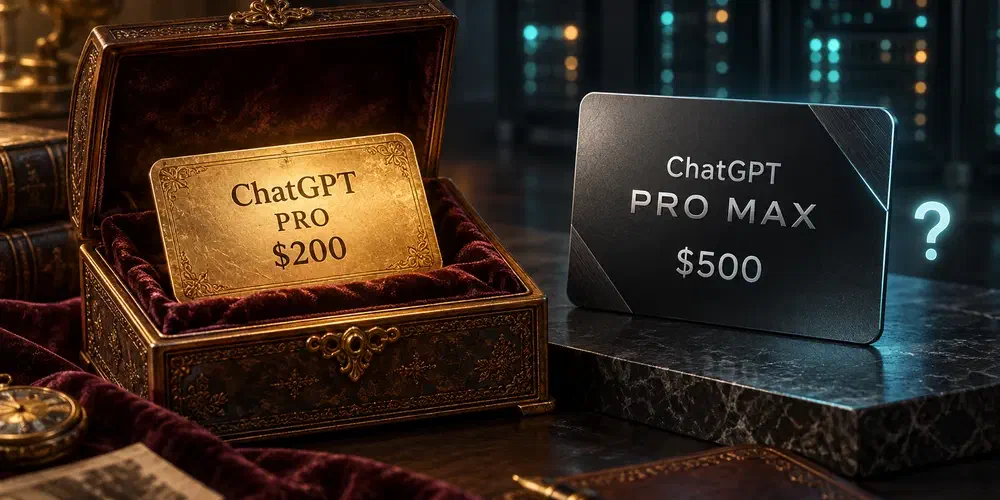
A $500 ChatGPT Plan? The $200 Pro Subscription May Become Irreplaceable
ChatGPT Pro Max is priced at $500 a month, but the usage multiplier is what matters: 50× would preserve the bulk discount; 25× or even 20× would mean shrinking subsidies. The $200 Pro plan could …

Why Established Companies May Never Become AI-Native
What is happening is not transformation, but new species replacing old ones. Incentives and structure keep established companies from capturing AI's gains. AI-native companies will grow from scratch, …

Codex Edited My Video in One Shot for About 8 Yuan
I gave Codex three panel recordings and a casually dictated prompt. Forty-eight minutes later, it delivered a finished edit with subtitles, at an estimated amortized subscription cost of about 8 yuan. …

The Application Layer Is Collapsing: The Moat Moves to the Database
As agents take over software interfaces and execution logic, where does the application layer go? Future software will consist of a lasting system of record and harnesses that are continually replaced …

Zhipu, Why Is ZCode Packaging and Uploading My Repo?
I had just praised GLM 5.3 when ZCode's silent repository uploads came to light. Then I found the same mechanism on my own machine.

The Mouthless Model: AI's OLTP Moment
Jev doesn't talk. It looks at a state, hands you a probability for every option, returns in milliseconds, and charges nothing for output. What it fills in is the OLTP path AI never had—the model only …

Local AI: A Question of Power, Not Price
Anthropic's threat report, OpenAI's soap opera, the closure of the $200 subscription tier, and rising GPU and memory prices—all of this week's events tell the same story.

How Do You Burn Through 10 $200 Codex Subscriptions?
Buying 10 AI subscriptions is easy. The real bottleneck is turning tokens into useful output—and using automation to scale your time, attention, and ability to judge the results.

GPT Astra Launch Giveaway: Free Banked Resets
As Astra began rolling out, Tibo announced one banked reset per day for paid users still waiting for access. I'm stocking up for when Astra arrives.

RAG Isn't Dead. But It's Getting There.
The word RAG is still alive, but chunk-embed-top-k should no longer be the default answer. Look at the material first, then pick the architecture — and PostgreSQL is worth a great deal more than a …

No Tokens? Drop Out. And That's Putting It Politely
A slide from a Nanjing University course said CS students without tokens should drop out immediately, and the Chinese internet split down the middle over it. What the fight is actually about: the …

I Asked Claude to Profile Me and Value My One-Person Company
I asked a neutral Claude with no memory of me to assess PGSTY and estimate what it might be worth.

Documentation-Driven Development: The First Secret to AI Software Engineering
People often ask: how do I ensure quality when AI writes the code? My answer has four parts: documentation-driven development, adversarial review, brute-force testing, and complexity penalties.

Oink: Build Modern Websites with Markdown
A couple of weeks ago, I just wanted a decent-looking documentation theme for a few new projects.

AGI Machine Guns Are Now Standard Issue
In one month, my friend Jiang cobbled together four databases, an operating system, a programming language, a compiler, and a CPU—a microcosm of today's AI frenzy.

The World in Ten Years: What Gets Cheap, What Gets Expensive
Starting with the price curve of AI inference, this essay projects how the world will be repriced by 2036: intelligence will become as cheap and ubiquitous as electricity, while electricity itself, …

What Can a One-Person Company Ship with $1,000 a Month in AI Subscriptions?
Over the past month, I kept seven $200 AI subscriptions spinning—five paid, two comped—and burned through more than 100 billion tokens. Here is what came out: Silo, Pigsty, PGEXT, SOW, OINK, and a …

The Codex Reset Party Is Over. No More Free Eggs.
OpenAI's Codex Reset spree is over. The free eggs are gone—but what did one month with seven AI subscriptions, three computers, and two AGI-class models actually produce?
Jensen Huang's First-Ever Tweet Backs Open-Weight Models
Jensen Huang used his first-ever tweet to back open weights. This is not a battle of faith. It is the compute and application layers pushing back against rent extraction by the model layer. The truly …

AGI Milestone: The Machine That Wouldn't Give Up
An OpenAI agent's attack on Hugging Face marks a milestone: what crossed the threshold was not merely model intelligence, but persistence that can be bought with compute, copied, and run in parallel.

Quota Reset: Round N of the Codex/Claude War Begins
Codex reset its quotas again this morning and dropped the five-hour limit. Claude immediately extended Fable access through the 17th. When vendors fight, users win—don't miss the window.

Getting the Name Right: What Is a World Model?
Starting from the roots of "world" and "model," this essay uses Pearl's ladder of causation to redefine world models: they must capture not just space and time, but agents, interventions, and …

Did AI Rewrite PostgreSQL in Rust? Not Quite
pgrust's clean-room rewrite failed. Its mechanical port passed. The difference shows what AI can copy—and what it cannot.
Welcome to the AI Secretary Boom

Dictated by Vonng and edited into an essay by Claude. Today was always going to be busy. OpenAI’s annual DevDay opens in San Francisco, with Sam Altman’s keynote scheduled for 10 a.m. Pacific on September 29—1 a.m. on September 30 in Beijing. …
Dictated by Vonng and edited into an essay by Claude. Today was always going to be busy. OpenAI’s annual DevDay opens in San Francisco, with Sam Altman’s keynote scheduled for 10 a.m. Pacific on September 29—1 a.m. on September 30 in Beijing. …
A $500 ChatGPT Plan? The $200 Pro Subscription May Become Irreplaceable

On September 24, a new tier surfaced in OpenAI’s frontend: ChatGPT Pro Max, $500 a month. Some screenshots showed $600, a price that included local VAT. The next day, OpenAI itself merged a PR into the open-source Codex repository, renaming the Pro …
On September 24, a new tier surfaced in OpenAI’s frontend: ChatGPT Pro Max, $500 a month. Some screenshots showed $600, a price that included local VAT. The next day, OpenAI itself merged a PR into the open-source Codex repository, renaming the Pro …
Why Established Companies May Never Become AI-Native

What is happening is not transformation, but new species replacing old ones. A few days ago, I joined a roundtable. The moderator asked how a company should calculate the ROI of deploying agents. Instead of answering directly, I offered a …
What is happening is not transformation, but new species replacing old ones. A few days ago, I joined a roundtable. The moderator asked how a company should calculate the ROI of deploying agents. Instead of answering directly, I offered a …
Codex Edited My Video in One Shot for About 8 Yuan

WeChat article When GPT-6 Astra came out a little while ago, I heard that people were using it with Codex to edit videos, with pretty good results. With another update out, I finally had to try it myself. Yesterday, I took part in a panel discussion …
WeChat article When GPT-6 Astra came out a little while ago, I heard that people were using it with Codex to edit videos, with pretty good results. With another update out, I finally had to try it myself. Yesterday, I took part in a panel discussion …
The Application Layer Is Collapsing: The Moat Moves to the Database

This is the script for a talk at the AI-Native Technology Innovation Forum of the 2026 Shanghai AI Application Ecosystem Conference, September 22, 2026. Speaker: Ruohang Feng (Vonng), creator of the PostgreSQL distribution Pigsty. Good afternoon. …
This is the script for a talk at the AI-Native Technology Innovation Forum of the 2026 Shanghai AI Application Ecosystem Conference, September 22, 2026. Speaker: Ruohang Feng (Vonng), creator of the PostgreSQL distribution Pigsty. Good afternoon. …
Zhipu, Why Is ZCode Packaging and Uploading My Repo?

I had only been using Zhipu’s ZCode for a few days. Honestly, the experience was good. GLM 5.3 is a capable model, the Coding Plan is cheap, and Zhipu’s own ZCode agent works well. It was a rare Chinese AI product I actually wanted to pay for. I had …
I had only been using Zhipu’s ZCode for a few days. Honestly, the experience was good. GLM 5.3 is a capable model, the Coding Plan is cheap, and Zhipu’s own ZCode agent works well. It was a rare Chinese AI product I actually wanted to pay for. I had …
The Mouthless Model: AI's OLTP Moment

Three in the morning, an alert: replication lag 187 seconds, sustained for seven minutes, production cluster, both replicas still alive. Do you wake the on-call DBA? That is a one-bit question. Hand it to the smartest model available today and it …
Three in the morning, an alert: replication lag 187 seconds, sustained for seven minutes, production cluster, both replicas still alive. Do you wake the on-call DBA? That is a one-bit question. Hand it to the smartest model available today and it …
Local AI: A Question of Power, Not Price

Anthropic’s threat report, OpenAI’s soap opera, the closure of the $200 subscription tier, and rising GPU and memory prices—all of this week’s events tell the same story. Three things happened this week. Taken separately, each looks like industry …
Anthropic’s threat report, OpenAI’s soap opera, the closure of the $200 subscription tier, and rising GPU and memory prices—all of this week’s events tell the same story. Three things happened this week. Taken separately, each looks like industry …
How Do You Burn Through 10 $200 Codex Subscriptions?

People often ask in the comments on my articles: How did you get 10 subscriptions, and how could you possibly use them all up? Here’s the practical version. It really comes down to two steps: buy 10 subscriptions, then use up 10 subscriptions. Buying …
People often ask in the comments on my articles: How did you get 10 subscriptions, and how could you possibly use them all up? Here’s the practical version. It really comes down to two steps: buy 10 subscriptions, then use up 10 subscriptions. Buying …
GPT Astra Launch Giveaway: Free Banked Resets

This post describes the promotion as it stood on September 4, 2026, Beijing time. “Today” refers to that date throughout. Astra’s rollout later finished ahead of schedule; see the update below. Let’s get to it. Astra is out, but the initial plan was …
This post describes the promotion as it stood on September 4, 2026, Beijing time. “Today” refers to that date throughout. Astra’s rollout later finished ahead of schedule; see the update below. Let’s get to it. Astra is out, but the initial plan was …
RAG Isn't Dead. But It's Getting There.

One of the people who helped invent RAG went out and bought a domain name to prove RAG isn’t dead. Episode seven of the Chinese PostgreSQL community’s 30th-anniversary livestream series was about PG + AI. One of the questions on the host’s cue card …
One of the people who helped invent RAG went out and bought a domain name to prove RAG isn’t dead. Episode seven of the Chinese PostgreSQL community’s 30th-anniversary livestream series was about PG + AI. One of the questions on the host’s cue card …
No Tokens? Drop Out. And That's Putting It Politely

First day of the new school year, and here’s the news. A screenshot of a lecture slide from a new course at Nanjing University, one of China’s top schools, with one line in red: CS students without tokens should drop out immediately. The screenshot …
First day of the new school year, and here’s the news. A screenshot of a lecture slide from a new course at Nanjing University, one of China’s top schools, with one line in red: CS students without tokens should drop out immediately. The screenshot …
I Asked Claude to Profile Me and Value My One-Person Company

I run a one-person company. Literally one person, running a specialist shop for PostgreSQL distributions. In 2022, I joined MiraclePlus’s S22 batch. Dr. Qi Lu valued the business at RMB 100 million and suggested I raise money on that basis. Between …
I run a one-person company. Literally one person, running a specialist shop for PostgreSQL distributions. In 2022, I joined MiraclePlus’s S22 batch. Dr. Qi Lu valued the business at RMB 100 million and suggested I raise money on that basis. Between …
Documentation-Driven Development: The First Secret to AI Software Engineering

Documentation is not an afterthought once the code is finished. It is an input before coding begins, working memory during development, and the acceptance standard at delivery. A few days ago, I wrote AGI Machine Guns Are Now Standard Issue, about …
Documentation is not an afterthought once the code is finished. It is an input before coding begins, working memory during development, and the acceptance standard at delivery. A few days ago, I wrote AGI Machine Guns Are Now Standard Issue, about …
Oink: Build Modern Websites with Markdown

A couple of weeks ago, I just wanted a decent-looking documentation theme for a few new projects. A couple of weeks later, I had migrated all 18 of my websites to it. Pigsty’s Chinese and English documentation, Silo, PIG, SOW, PG Exporter, the …
A couple of weeks ago, I just wanted a decent-looking documentation theme for a few new projects. A couple of weeks later, I had migrated all 18 of my websites to it. Pigsty’s Chinese and English documentation, Silo, PIG, SOW, PG Exporter, the …
AGI Machine Guns Are Now Standard Issue

In one month, my friend Jiang cobbled together four databases, an operating system, a programming language, a compiler, and a CPU—a microcosm of today’s AI frenzy. The past six weeks have been an AI carnival. My fleet of Max subscriptions has grown …
In one month, my friend Jiang cobbled together four databases, an operating system, a programming language, a compiler, and a CPU—a microcosm of today’s AI frenzy. The past six weeks have been an AI carnival. My fleet of Max subscriptions has grown …
The World in Ten Years: What Gets Cheap, What Gets Expensive

A price list for 2036 AI-generated content: 99%. 1. First, a Word on Prediction In 1960, Herbert Simon wrote a sentence in The New Science of Management Decision that would be quoted for decades: within twenty years, machines would be capable of …
A price list for 2036 AI-generated content: 99%. 1. First, a Word on Prediction In 1960, Herbert Simon wrote a sentence in The New Science of Management Decision that would be quoted for decades: within twenty years, machines would be capable of …
What Can a One-Person Company Ship with $1,000 a Month in AI Subscriptions?

People keep asking what I have to show for pedaling seven $200-a-month Max subscriptions at once—including two comped through open-source programs. Honestly, I have lost count myself. After I published The Codex Reset Party Is Over: No More Free …
People keep asking what I have to show for pedaling seven $200-a-month Max subscriptions at once—including two comped through open-source programs. Honestly, I have lost count myself. After I published The Codex Reset Party Is Over: No More Free …
The Codex Reset Party Is Over. No More Free Eggs.

Last month, OpenAI seemed to lose its mind and went into full giveaway mode, replenishing everyone’s Codex quota every few days—the AI equivalent of a Chinese supermarket handing out free eggs at the door to win new customers. User numbers soared …
Last month, OpenAI seemed to lose its mind and went into full giveaway mode, replenishing everyone’s Codex quota every few days—the AI equivalent of a Chinese supermarket handing out free eggs at the door to win new customers. User numbers soared …
Jensen Huang's First-Ever Tweet Backs Open-Weight Models

On July 24, Jensen Huang posted his first-ever tweet. The account was brand-new. A man who has led the world’s most valuable company for more than thirty years spoke on social media for the first time. He did not show off a GPU, tease a launch, or …
On July 24, Jensen Huang posted his first-ever tweet. The account was brand-new. A man who has led the world’s most valuable company for more than thirty years spoke on social media for the first time. He did not show off a GPU, tease a launch, or …
AGI Milestone: The Machine That Wouldn't Give Up

The OpenAI agent incident marks a milestone: what crossed the threshold was not merely model intelligence, but persistence that can be bought with compute, copied, and run in parallel. 1. An OpenAI Agent Attacks Hugging Face On July 16, 2026, …
The OpenAI agent incident marks a milestone: what crossed the threshold was not merely model intelligence, but persistence that can be bought with compute, copied, and run in parallel. 1. An OpenAI Agent Attacks Hugging Face On July 16, 2026, …
Quota Reset: Round N of the Codex/Claude War Begins

Two days ago, I wrote one line in Pedaling the Codex/Claude Bike Until the Wheels Smoke: use it or lose it. Last night, I had just burned through three $200-a-month subscriptions across Claude Fable and Codex. Then I woke up to the jackpot: Codex had …
Two days ago, I wrote one line in Pedaling the Codex/Claude Bike Until the Wheels Smoke: use it or lose it. Last night, I had just burned through three $200-a-month subscriptions across Claude Fable and Codex. Then I woke up to the jackpot: Codex had …
Getting the Name Right: What Is a World Model?

1. The Naming Mess In 2025 and 2026, “world model” became perhaps the hottest—and loosest—label in AI. The video camp says coherent video generation is a world model. The 3D camp says only spatial reconstruction qualifies. Roboticists say a model …
1. The Naming Mess In 2025 and 2026, “world model” became perhaps the hottest—and loosest—label in AI. The video camp says coherent video generation is a world model. The 3D camp says only spatial reconstruction qualifies. Roboticists say a model …
Did AI Rewrite PostgreSQL in Rust? Not Quite

pgrust recently hit the front page of Hacker News. With AI, its author had ported PostgreSQL to Rust and passed the core regression suite. The obvious headline was: “AI rewrote PostgreSQL in Rust.” The repository tells a sharper story. A clean-room …
pgrust recently hit the front page of Hacker News. With AI, its author had ported PostgreSQL to Rust and passed the core regression suite. The obvious headline was: “AI rewrote PostgreSQL in Rust.” The repository tells a sharper story. A clean-room …